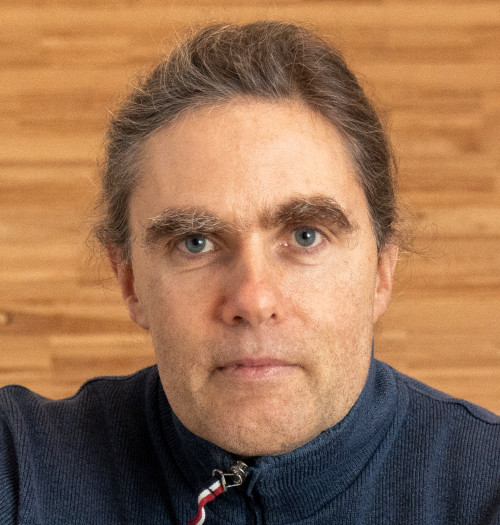
My name is Ejvind Hansen. I’m a philosopher of the public sphere. Since 2010, my work has focused on how public debates address democratic blind spots, informed scholarly and civic discussions on democracy, and contributed to an understanding of technology’s impact on public discourse and the Fourth Estate.
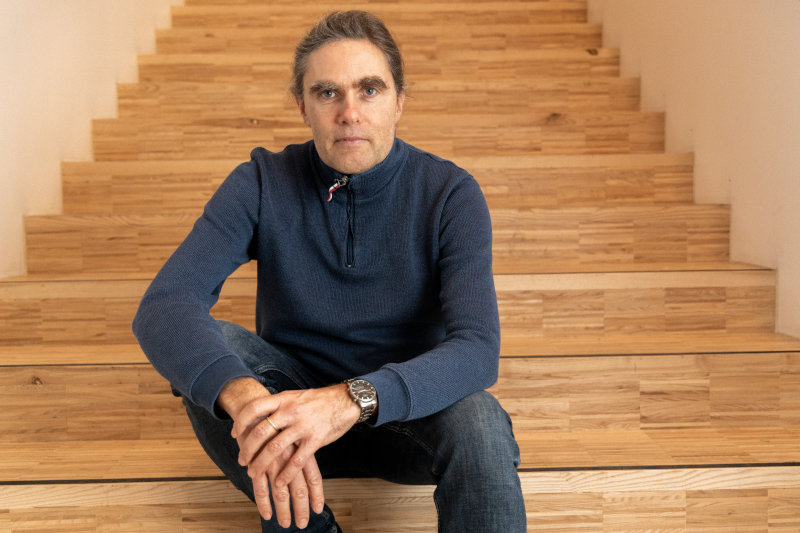
I am a senior associate professor at the Danish School of Media and Journalism (DMJX), where my main focus is on the intersections between democracy, the public sphere and technology – all examined through the lens of philosophical analysis.
I am particularly interested in looking beyond the prevailing forms of consensus and the conflicts that are taken for granted, in seeking out the cracks in the fabric of coherence and the silence behind what is said.
On a general level, I am inspired by hermeneutics’ idea that philosophy is about becoming better at asking questions; I am interested in the deliberative endeavour to reach mutual understanding.
At the same time, however, I insist that the efforts to create coherence and build consensus in philosophical thought and social discourse must be continually challenged by pointing out fundamental logjams or deadlocks that structure society and discourse. In this work, I am particularly inspired by more poststructuralist currents in philosophy.
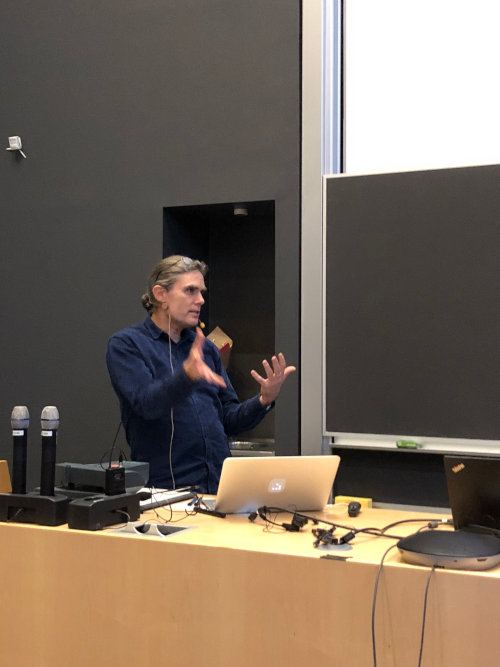
My interest in the dialectic between what creates coherence and what fragments has led me to a focus upon the paradoxical foundation of thought, which is seeking to reveal systematic connections, whilst, at the same time, the diversity of existence fundamentally resists such effortless coherence.
The German philosopher, Immanuel Kant, first articulated this insight as the foundation of and motor for his critique of pure reason:
Unsre Erkenntnis entspringt aus zwei Grundquellen des Gemüts, deren die erste ist, die Vorstellungen zu empfangen (die Rezeptivität der Eindrücke), die zweite das Vermögen, durch diese Vorstellungen einen Gegenstand zu erkennen (Spontaneität der Begriffe); durch die erstere wird uns ein Gegenstand gegeben, durch die zweite wird dieser im Verhältnis auf jene Vorstellung (als bloße Bestimmung des Gemüts) gedacht. (KrV, intro, trans log)
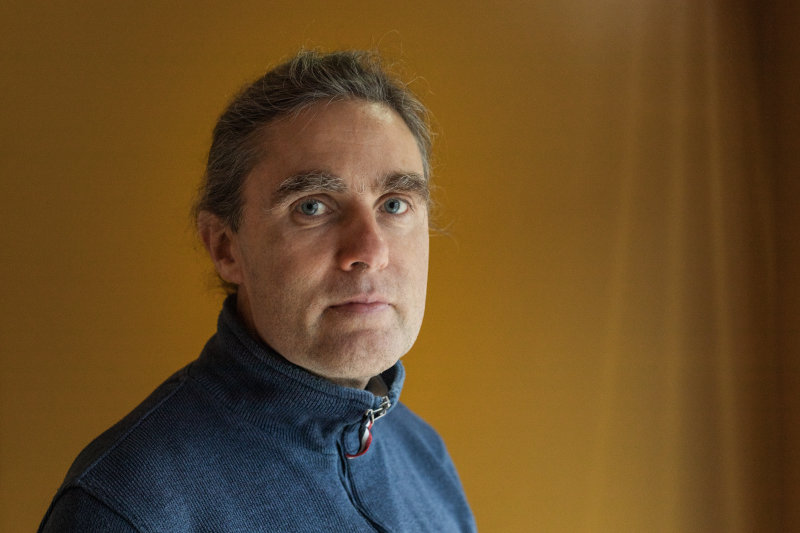
The assignment of philosophy is to bring to light how the world and society present us with a number of unsolvable tasks that we have to try to solve — despite their inextricability.
In relation to the democratic public sphere, philosophy is important because an awareness of these logjams or deadlocks can help us keep open the social questions — despite a wish on the side of the powerful to keep them hidden, because often they will have gained their positions as a result of current strategies of handling the deadlocks.
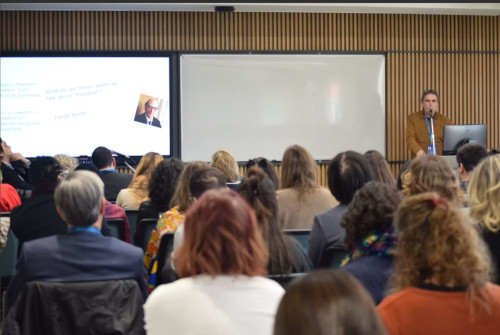
More concretely this interest has led me to reflections on the freedom of expression (how to prevent freedom of expression from undermining itself), courage in the democratic public sphere (how to facilitate that it is possible to participate courageously and challenging in the public debates), forgiving (how forgiving can be used to break down stereotypes and unsolvable conflicts). A special area of focus has also been how discourse analysis can be an important tool for the fourth estate.
Last but not least, in recent years I have been interested in silence in the public discourses (how silence plays a fruitful role in public discourses — with a special emphasis on listening-, focusing-, and thoughtfulnessgenerating silence).

Background information
I am trained as a philosopher at Aarhus University, where I hold a Master’s degree (1999), a PhD (2005) and the higher doctoral degree (Dr.Phil, Habil — 2024) in philosophy. From 2002 to 2009 I was employed at the Department of Philosophy and History of Ideas at Aarhus University, where I taught and conducted research in traditional philosophical subjects. My focus was particularly on German phenomenology, critical theory and French poststructuralism.
Since the end of 2009, I have been employed as a senior associate professor at the Danish School of Media and Journalism, where I mainly focus on the philosophy of the public sphere.
Publications
- Books (link)
- Academic publications (link)
- Dissemination (link)
- See also:
- Orcid
- UCViden (Danish researchdatabase)
- Google Scholar
Contact and further readings
My professional contact information can be found here (link). I can also be contacted through the contact page (link). For further information, I recommend clicking on the “Philosophy”-menu on this page.